The image
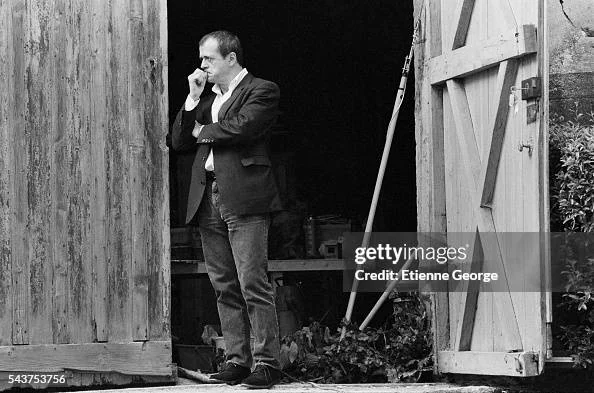
The example at hand is a Getty Images asset: a photograph captioned 'On Set of the Film Lucie Aubrac,' showing French actor and director Patrice Chereau on the set of the 1997 film directed by Claude Berri. Getty's own asset page credits the image to 'Etienne George / Contributor,' via the Sygma Premium collection, dated created 1 November 1995, and lists it as rights-managed. The page states plainly: 'This image is intended for Editorial use (e.g. news articles).'
What the documents show
The asset page's restriction language mirrors Getty's general license agreement, a living document as retrieved on 16 September 2026, which states that content marked 'editorial' or 'intended for editorial' is not model or property released and is primarily intended for descriptive purposes such as news reporting or discussion of current events, and that using such content for a commercial, promotional or advertising purpose requires prior written consent and an additional fee. The agreement separately bars altering the editorial integrity of such content beyond technical cropping and bars distributing it as a standalone file outside a licensed project. The two documents corroborate one licensing structure at two levels of specificity: the general agreement and one asset's own restriction line.
Production context
For a production researcher, an on-set photograph like this is useful as documentary evidence of a director's presence and working environment on a specific day, credited to a named photojournalist and agency rather than the production itself. Editorially, that credit chain matters: the image was made by a photojournalist working for a photo agency, not the studio's own unit photographer, which is part of why Getty licenses it as editorial content rather than as a production-owned asset that could be relicensed for advertising.
Reference versus imitation
Getty's own terms draw the line at commercial reuse and standalone redistribution, not at looking or citing: a researcher may examine the image and describe what it shows, but reproducing it in a commercial deliverable, or extracting it as a downloadable standalone file outside a licensed use, falls outside what the editorial license permits without a separate agreement. The asset page's own restriction line, 'Contact your local office for all commercial or promotional uses,' is Getty's own account of that boundary, not a third-party summary of it.
- Is an image marked editorial, and does the intended use match that restriction?
- Who is credited as the photographer and agency, and does that match a production's own unit photography?
- Would the intended use require a separate commercial license under the platform's own terms?
Getty's license agreement and this asset's own page together describe a specific, named restriction on a specific, credited photograph. Both documents draw the same line: editorial description and citation are licensed; commercial reuse is not, without a separate agreement.
Sources & reading trail
States that content marked editorial is not model or property released, is intended for descriptive use, and requires a separate license for commercial use.
Source published: Not established · Retrieved: 16 September 2026
Credits the photograph to Etienne George via Sygma Premium and states it is intended for editorial use only, as rights-managed content.
Source published: Not established · Retrieved: 16 September 2026
Records, documentation and rulings establish the entry; the reference-versus-imitation reading is Screen Visual Lab editorial analysis. This retrospective draft does not imply the site published on the event date.