History / From the library001
A camera club merger produced cinematography's oldest trade record
The ASC's own charter and centennial account date its 1919 founding and its magazine's later 1920 launch.
Event: 8 January 1919
3 min readRead entry ↗
Retrospective reference entries / 100 entries
Production-design and cinematography records, colour science, reference practice, model controls, credit rules and the older precedents behind moving-image visuals, each naming the image, its production context and the line between reference and imitation.
Historical event dates and source dates are separate from the preparation date of this local edition. Every entry is a retrospective draft prepared 16 September 2026; none was published on its historical date.
100 entries
The ASC's own charter and centennial account date its 1919 founding and its magazine's later 1920 launch.
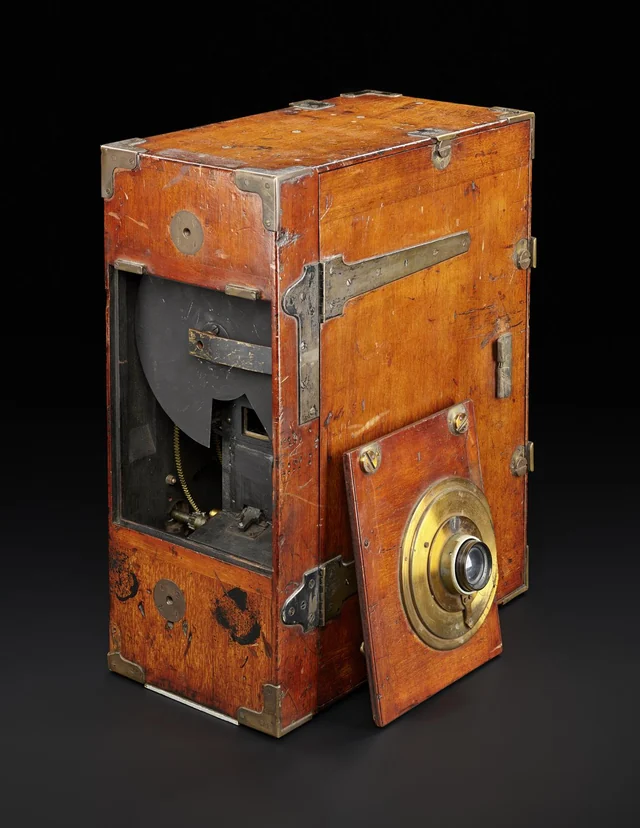
Disney's own archive and Garity's 1942 patent date the multiplane camera's first use and its stated purpose.
Ray Rennahan's own record distinguishes Becky Sharp's feature debut from three-strip Technicolor's 1932 debut.
A Library of Congress essay separates King Kong's animation, photography and optical compositing credits.
A March 1953 trade article and the Academy's own ceremony record date CinemaScope's debut and its reception.
Trade and museum records date Eastmancolor's arrival by its effect on studio labs, not a precise release day.
Library of Congress records credit Bass's 1955 title sequence while marking a separate credit as contested.
ILM's own history page and the Academy's 1978 ceremony record divide the Dykstraflex's credit among five names.
Brown's 1977 patent and Tiffen's own history page separately date the Steadicam's mechanism and its debut film.
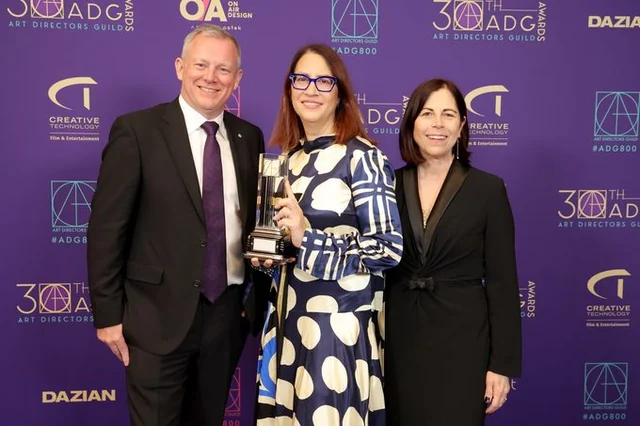
The Art Directors Guild's own history and magazine page date the mergers that produced today's Local 800.
Adam's own recorded account ties Dr. No's interrogation room to a specific, quoted budget constraint.
UAL's own archive page names its holding categories for Kubrick's career without itemizing 2001 specifically.
Mead's own timeline and the Academy's record credit two distinct, documented jobs on the same film.
Murnau-Stiftung and filmportal.de records name three credited designers behind Metropolis's monumental sets.
Warner Bros. and Insight Editions name Patrice Vermette's role without detailing Arrakis's real-world sources.
ADG and Academy records credit Colin Gibson alongside a large, specifically named design department.
Fox Searchlight's promotional language and the Academy's credit line document two different kinds of fact.
The Art Directors Guild's history and awards page together date and structure its own annual ceremony.
Two ASC-published interviews record what Willis says he changed in exposure and printing, not a generic dark look.
ASC-published talks and essays record Storaro's own account of a personal method, not an industry standard.
His own site posts specific, dated answers on format and color choices, not a general statement of philosophy.
American Cinematographer's own feature names the process and the unranked Top 10 behind the 2019 centennial list.
His own 1970 ASC interview credits natural pre-dawn light, not photochemical processing, for the sepia-to-color change.
An ASC craft column names key, fill and backlight as classic technique, not a rule every production follows.
An ASC feature quotes Lubezki on shooting only with natural and firelight within a fixed daily schedule.
An ASC feature credits specific LED fixtures and a set LUT for Arrakis's hazy skies and bounced interior light.
His own 1994 ASC interview credits handheld imperfection and a high-contrast print stock, in his stated words.
His American Cinematographer article credits faster film, coated lenses and arc light, not a single trick.
A dated code release and the Academy's own documentation show what version 1.0 standardized in a color pipeline, not any single look.
Dolby's own content-creator documentation shows how automatic analysis and artistic trims generate the metadata that maps one HDR grade to other screens.
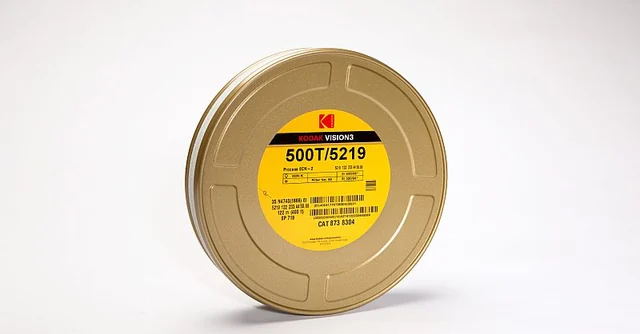
The current Kodak technical data sheet documents exposure indexes, processing and storage for Vision3 500T, stopping short of any claimed appearance.
Adobe's published Cube LUT specification and DaVinci Resolve's own manual describe two separately developed, and not identical, uses of the .cube file.
ARRI's own VFX white paper and its newer LogC4 specification document how ALEXA log encoding should be decoded downstream, not any resulting look.
Netflix's Partner Help Center specifies P3, D65 and PQ delivery values for its own platform, documented as Netflix's requirement, not an industry rule.
SMPTE ST 2084, approved in August 2014, specifies a transfer function up to 10,000 nits, distinct from the separate HLG approach documented later.
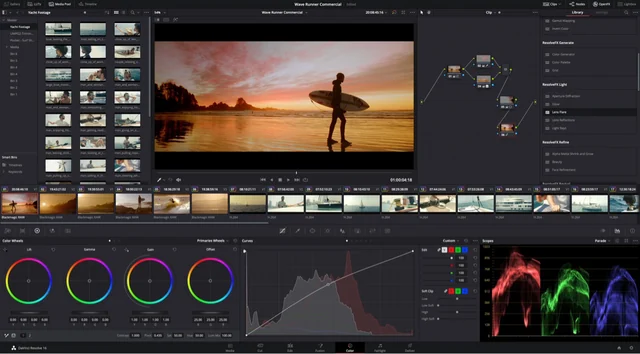
Blackmagic Design's current reference manual documents four distinct color-science settings in DaVinci Resolve, each with a different working method.
ITU-R BT.2020 specifies exact chromaticity coordinates for ultra-high-definition color, a defined gamut rather than a promise every screen reaches it.
Tool documentation for the ASC Color Decision List shows it standardizes only slope, offset, power and saturation, not a full creative grade.
ShotDeck's about page and terms of use describe who built the film-still database and how far a subscriber's license extends.
Pinterest's 2025 newsroom post and help center describe a Gen AI label and an appeals process, not a guaranteed filter.
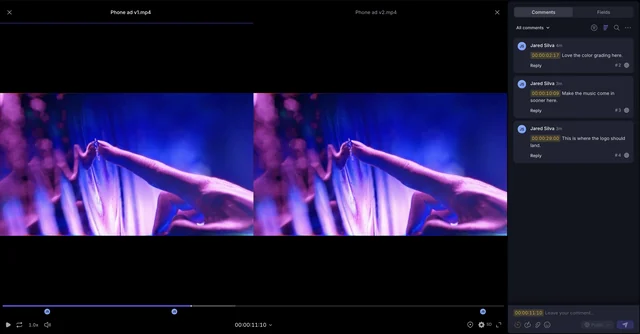
Frame.io's own help articles describe a side-by-side Comparison Viewer and version stacking built for review, not editing.
Criterion's Days of Heaven release page and essay show restoration notes, commentary and criticism kept distinct and credited.
Getty's license agreement and one credited Lucie Aubrac set photo both restrict editorial content to descriptive, non-commercial use.
The BFI's own viewing-service page describes a booked, copy-free process for researchers to view unreleased preserved material.
The Academy's own library pages show production files and design drawings require an appointment, unlike its walk-in core collection.
Archived Cinemetrics pages show a shot-timing method turned into a database of user-submitted, not studio-verified, measurements.
The Art Directors Guild's own archive pages describe named collections combining oral history transcripts with original design drawings.
Wikimedia Commons's licensing policy and a Nosferatu file page show how a pre-1931 US publication date supports one still's status.
Archived pages from the Previsualization Society state its mission and definition of previs; its live site now shows only a placeholder.
Boris FX's current pages and an archived Andersson Technologies site trace one camera-tracking tool's continuity and limits.
Epic's 2019 field guide and its 2021 sequel state what the company's real-time filmmaking workflow covers, and who it interviewed.
Vicon's current site states what its optical systems and software claim to do, without naming a specific film's pipeline.
SMPTE's own standard and blog say time code labels frames for editing and VFX sync, tracing ST 12 back to 1975's SMPTE 12M.
ARRI's press archive traces Alexa from an IBC 2009 preview to its NAB 2010 launch and IBC 2010 follow-up, in the company's own words.
Panavision's press materials date the original Millennium DXL to January 2017 and the DXL2, its RED-sensor successor, to February 2018.
American Cinematographer's 1999 feature and the Academy's own awards record credit John Gaeta's still-camera array for The Matrix's effect.
American Cinematographer's 2010 account describes how Avatar's SimulCam composited live and computer-generated performance in real time.
The Ninth Circuit's opinion rests on the Copyright Act's own human-focused language and never mentions AI.
Court records show a Delaware copyright and trademark complaint, later voluntarily dismissed with no ruling on the merits.
The VES's own awards rules name a VFX Supervisor and Producer as key personnel, a standard scoped to its own awards.
The Ninth Circuit found Nike's Jordan photo not substantially similar, based on specific compositional differences.
A Ninth Circuit opinion describes the Basic Agreement's pseudonym panel and expedited arbitration in one real dispute.
The Compendium's own text bars registering work by animals, plants, or automatic machines, predating today's AI disputes.
The SOC's own site states it negotiated the SOC initials in screen credits, distinct from any guild's credit title.
IATSE's 2024 ratification announcement describes AI protections in the Basic Agreement covering ADG's Local 800.
Court records show a 2018 dismissal for no substantial similarity, a later reopening, and a 2021 stipulated end.
The Second Circuit found 25 of 30 altered photographs fair use, remanding five others for further review.
The 2023 paper and its repository document how edge, depth, pose and scribble maps constrain diffusion output, not copy it.
Tencent AI Lab's 2023 paper documents a 22-million-parameter adapter that conditions diffusion output without retraining the base model.
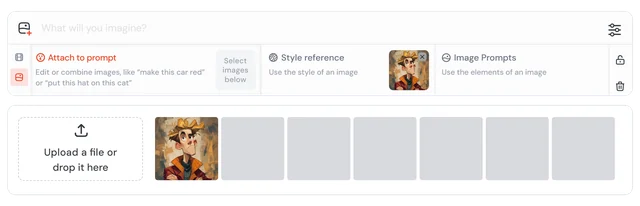
The company's own help article says style reference carries colors, medium and lighting, not objects or people, from an image.
Archived help pages document Motion Brush and Camera Control; Runway's current pages state both features were retired for newer models.
Adobe's own help pages document separate Structure Reference and Style Reference controls, each framed as adherence, not exact replication.
The 2023 T2I-Adapter paper documents a lightweight, frozen-base approach to structural control, compared against fine-tuning, not named rivals.
The open-source Stable Diffusion animation project documents named motion and coherence schedules, and its own unmaintained status.
Leonardo.Ai's developer recipes document a numbered init_strength range and separate character and style ControlNet presets.
Midjourney's documentation traces Character Reference to Omni Reference and states neither guarantees an identical likeness.
Kling AI's API reference states specific size, ratio, duration and reference-element limits for its image-to-video generation.
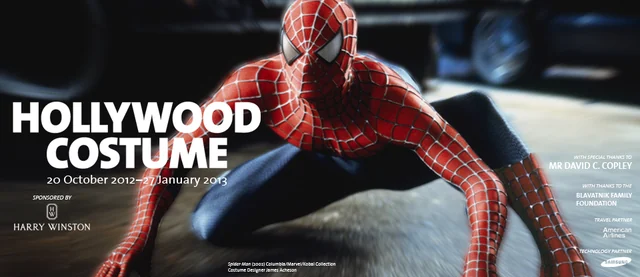
The V&A's own 2012 exhibition pages name the designers, films and rights holders behind more than 100 Hollywood costumes.
The Academy Museum's object record and Technicolor's own history page name a maker and a process, not a single author of the film's look.
The Academy Museum's object record and the H.R. Giger Museum's biography separate Giger's documented design work from a co-credited maker.
The ADG's own awards journal and the Academy's nominee record name Sarah Greenwood's department, not one author of the film's look.
The museum's own exhibition calendar dates its 2021 opening, and its collection pages name every credited maker, not just one designer.
DK's own book pages and StarWars.com's coverage show the Visual Dictionary series pairing Lucasfilm access with narrative framing.
An archived Pinterest page and today's help article show Lens launching narrower than its current camera-and-shop tool.
The Barbican's own 2012 press release names EON's archive access and marks which Bond costumes are originals or commissioned remakes.
The Museum of the Moving Image's own object page credits Ralph McQuarrie and Stuart Freeborn and confirms where the mask is shown.
The institution's own collections page states its costume holdings' scope and pairs that with a loan policy for the physical objects.
SMPTE's own presidents list and mission page show what the society's founding record actually documents today.
Museum apparatus and film records show how Kinemacolor's red-and-green filters built its color image, and where the record ends.
The Library of Congress's own registry essay details how Cinerama's three-projector system worked, and where it played.
The Berne Convention's own text of Article 6bis shows exactly which attribution and integrity rights it grants, and to whom.
The statute's own text names the works and rights it covers, and excludes film and other audiovisual works by name.
The Copyright Office's own circular and compendium show how a photograph, including one taken on a production, is registered as its own work.
The Second Circuit's 1992 opinion explains exactly why Jeff Koons's sculpture of a photograph was not fair use.
The WGA's own credits manuals show how 'created by' and story-credit determinations are made, including by arbitration.
The National Film Registry's own record names White Christmas as VistaVision's first production.
Academy and Guild records show Cedric Gibbons's MGM credit named a supervisor, not always the hands-on designer.
OpenEXR's own documentation credits Industrial Light & Magic's 2003 open-source release and names the format's original designers.
The Second Circuit's 2006 opinion shows why a transformed, court-documented use of one photograph fragment was fair use where an earlier Koons work was not.
Science Museum Group's own Cinecolor apparatus and film records show what the cheaper two-color subtractive process actually recorded, and its limits.
Try another category or clear your search.