
The image
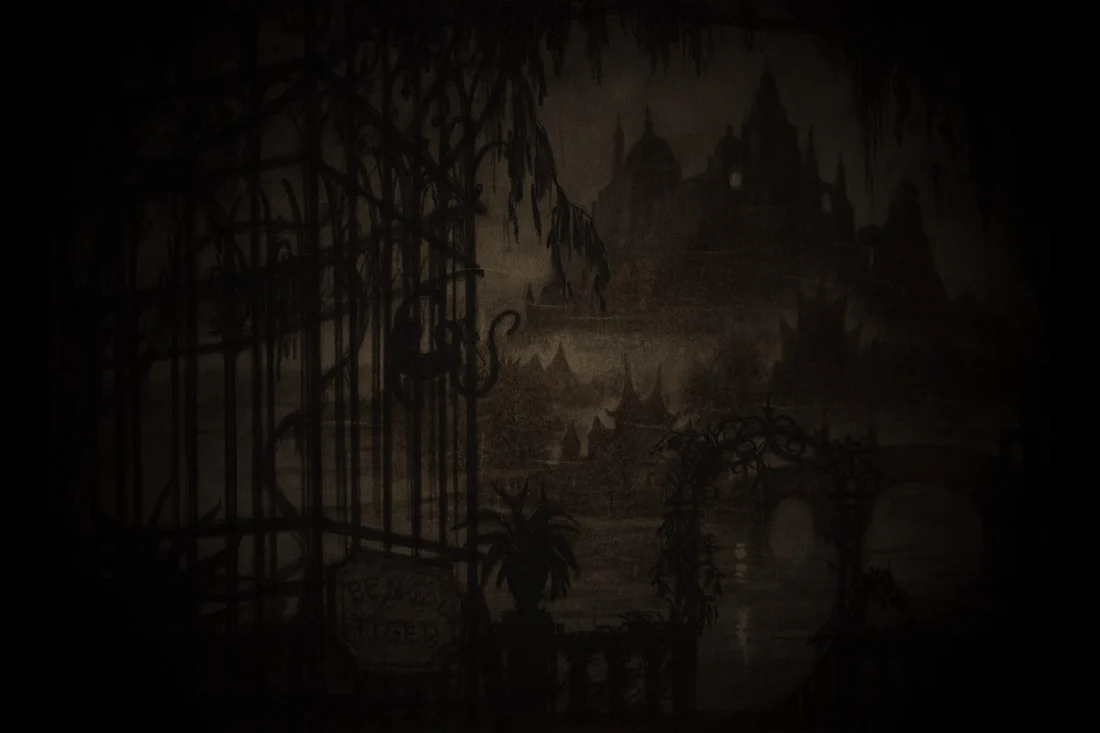
Among the artifacts on the Academy Museum's own collection pages is a study for a matte painting of Charles Foster Kane's Xanadu mansion in Citizen Kane (1941), rendered in black chalk on trace mounted on illustration board. Its maker field reads: 'Production design: Van Nest Polglase. Matte paintings: Mario Larrinaga, Chesley Bonestell, and Fitch Fulton.' That single line separates the credited production designer from three named matte painters on one film, which is the museum's own record, not an assumption about who drew what.
What the documents show
The museum's own exhibitions listing dates several of its inaugural shows, including 'Stories of Cinema: Story' and two 'Inventing Worlds and Characters' installations, to 30 September 2021, which is the museum's own dated record of when its galleries opened to the public. Its about page states a mission 'to research, develop, and present cinematic content' rather than to hold court on authorship. Object pages across the collection follow one consistent format, naming a maker, materials, the holding collection and an image credit for each piece, which is a documented curatorial habit rather than a one-off caption.
Production context
Editorially, that consistent object-page format looks designed for research use rather than display alone: a visitor or remote researcher can read exactly who is credited with a design and who executed a specific rendering, without the two being flattened into one name. For Xanadu's matte painting, that distinction matters for production practice: a 1941 art department routed a supervising designer's concept through specialist matte artists, a division of labor the museum's own record preserves rather than compresses.
Reference versus imitation
A caption that says only 'Van Nest Polglase's Xanadu' drops two-thirds of the credited makers from the museum's own record and mislocates authorship of the physical painting. The museum's format, maker, materials, collection, image credit, gives a reference practice exactly the fields it needs to cite an artifact completely rather than by the most famous name attached to it. Treating a museum-catalogued study as free-to-copy source material also skips the credit the object page itself supplies.
- Does a citation list every named maker on an object record, or only the best-known name?
- Is a museum's opening or exhibition date drawn from its own dated listing, not a guess?
- Does a credit distinguish a supervising designer from the artists who executed the work?
Opened to the public on 30 September 2021, the Academy Museum's own collection pages model the citation habit this site asks of its readers: name the designer, name the makers, and let the object record, not the most famous name, settle who gets credit.
Sources & reading trail
Names production designer Van Nest Polglase and three matte painters separately for one artifact.
Source published: Not established · Retrieved: 16 September 2026
Museum's own listing dating its inaugural exhibitions to 30 September 2021.
Source published: Not established · Retrieved: 16 September 2026
Museum's own stated mission to research, develop and present cinematic content.
Source published: Not established · Retrieved: 16 September 2026
Records, documentation and rulings establish the entry; the reference-versus-imitation reading is Screen Visual Lab editorial analysis. This retrospective draft does not imply the site published on the event date.