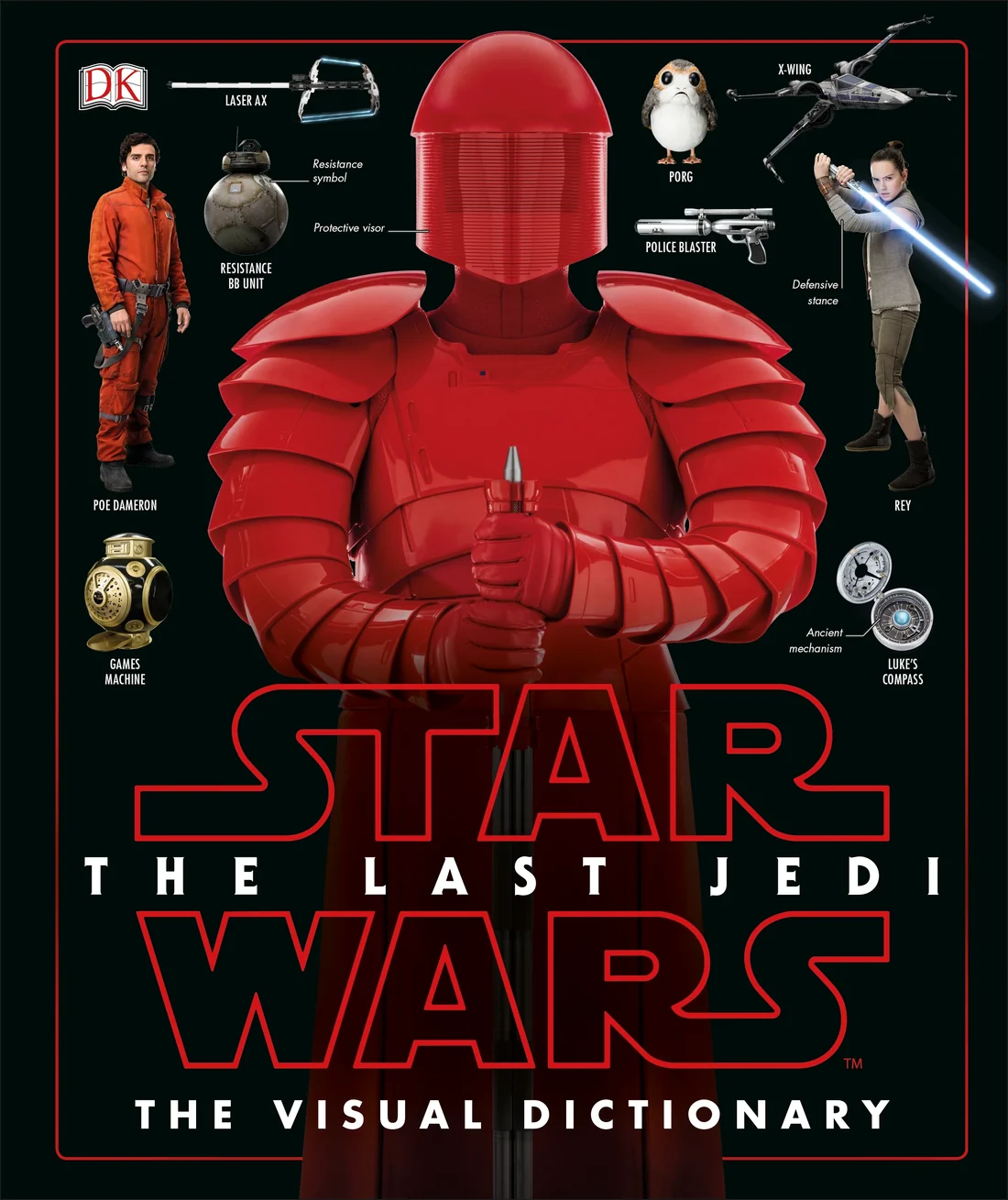
The image
The object at hand is a specific book: 'Star Wars: The Last Jedi – The Visual Dictionary,' published by DK on 15 December 2017, 80 pages, credited on the publisher's own product page to author Pablo Hidalgo and marked '© & TM 2017 Lucasfilm Ltd.' DK's page describes it as revealing 'the characters, creatures, droids, locations, and technology from the new film,' packed with more than 100 images. That is one volume in an ongoing series, not a single fixed artifact.
What the documents show
DK's own author biography states Hidalgo worked as 'a visual effects concept artist and digital compositor' before joining Lucasfilm in 2000, and that by this book's publication he was 'managing editor for StarWars.com,' an internal company role rather than an outside critic's. Separately, StarWars.com's own coverage of the book, published 12 March 2018, calls it 'our own equivalent to a holocron,' a fictional in-universe information device, saying the book 'literally defines what we see in the film.' Neither publisher document states outright that the series is compiled from behind-the-scenes photography or on-set research; that connection is reasonable given the author's role, but it is an inference from his job description, not a sourcing claim either page makes directly.
Production context
Editorially, a reference book written from inside Lucasfilm's own Story Group can carry names, specifications and design lineage that would otherwise sit only in a studio's internal files, which is why such volumes get used by art departments and visual researchers well beyond the fan audience the marketing targets. That value depends on knowing which parts of a given entry are documented production detail and which are narrative color invented to fill out an encyclopedia entry.
Reference versus imitation
StarWars.com's own 'holocron' framing is the clue a researcher should not skip: it markets the book in the story's own voice, which means an entry can read as settled fact while actually being narrative material written to explain the fiction, not a studio's design rationale. Citing a Visual Dictionary page for a droid's in-universe backstory is a different act from citing it for a credited concept artist's name, and the two should not be footnoted the same way. Treating every named detail as production fact repeats exactly the confusion the publisher's own in-universe voice invites.
- Does an entry describe a real production credit, or an in-universe explanation invented for the book?
- Is the author's access to Lucasfilm material stated, or only inferred from a job title?
- Would the same claim be citable from a studio production document rather than a fan-facing guide?
Read carefully, DK's own product pages and StarWars.com's own coverage describe a series that trades on real studio access while writing in the story's voice, which makes it a useful but mixed source that a visual reference practice has to sort before quoting.
Sources & reading trail
Publisher's own product page giving the book's author, publication date, page count and description.
Source published: 15 December 2017 · Retrieved: 16 September 2026
Official StarWars.com coverage framing the book as an in-universe 'holocron' rather than a production document.
Source published: 12 March 2018 · Retrieved: 16 September 2026
Records, documentation and rulings establish the entry; the reference-versus-imitation reading is Screen Visual Lab editorial analysis. This retrospective draft does not imply the site published on the event date.