The image
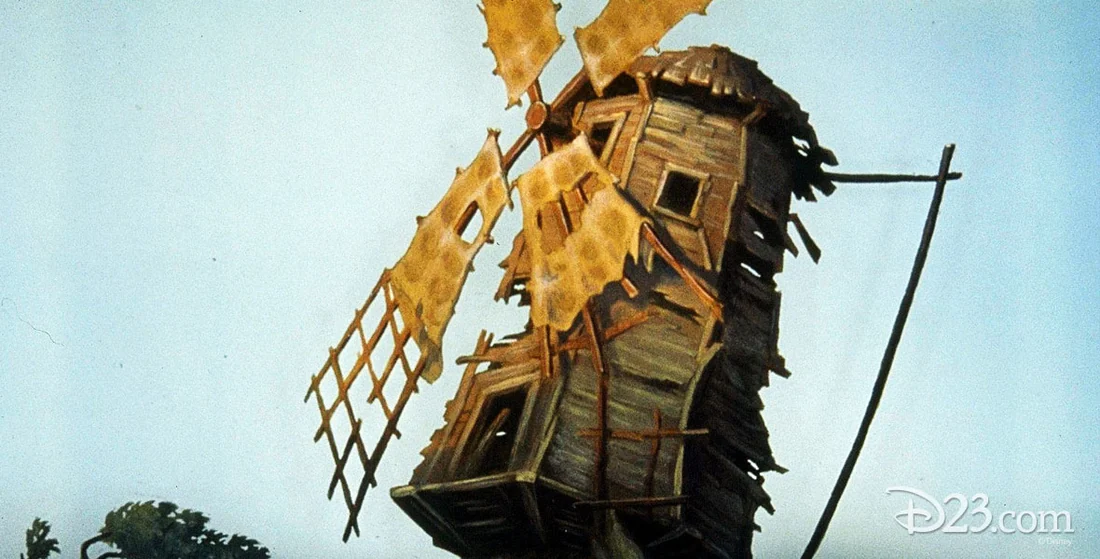
Disney's own reference page for the multiplane camera identifies a specific first frame: the vertical camera stand built to film The Old Mill, released 5 November 1937, which the studio's own archive entry calls the first film to use the multiplane camera. The stand held up to six panes of glass, each carrying a painted background layer at a different distance from the lens, so a nighttime storm sequence could show buildings and machinery receding into real depth rather than a single flat plane.
What the documents show
The studio's own multiplane camera entry credits the device to Disney staff working under engineer William Garity, states it was used most extensively in the 1940s features Pinocchio, Fantasia and Bambi, and notes Walt Disney received a Scientific and Technical Class II plaque for its design, separate from The Old Mill's competitive Best Cartoon award. The page also records that animator Ub Iwerks independently built his own horizontal version of the same idea. A second document, Garity's own US patent 2,281,033, filed 8 May 1939 and granted 28 April 1942 to Walt Disney Productions, states the problem being solved: cels and painted backgrounds laid in a single plane put every element within the camera's focal plane, so a finished shot looked like flat cut-outs, with no illusion of depth, and a foreground character seemed to float, disconnected from the background. The patent adds a detail the studio's page does not: a prior method's failure at trucking shots, where an artist following a character toward the background had to hand-draw an entire series of backgrounds to fake the changing distance.
Production context
The patent was filed nearly two years after The Old Mill's release, meaning the studio used and refined the rig before formalizing its claim, an editorial reading of the dates rather than a claim either document states outright. On set, the stand let artists separate a scene into physically distinct layers of glass rather than hand-drawing parallax frame by frame, addressing a constraint the patent names: animators could not consistently render the soft diffusion that indicates distance to a human eye.
Reference versus imitation
Both documents are careful about scope. Disney's page does not claim the multiplane camera was animation's first depth device, and it credits a rival's independent, differently configured version. A modern reference to layered-plane compositing that cites this patent for the specific glass-and-camera-stand mechanism it describes is reference; describing any later multi-layer technique as descending from this one patent, without checking whether it shares the mechanism the 1942 claims cover, would misuse the document's scope.
- Does a source credit inventing layered depth, or only Disney's specific glass-stand version of it?
- Is the cited date the first production use, or the later patent filing?
- Does a modern reference to the technique specify which named artists' account it is drawing from?
Between the studio's retrospective page and its inventor's patent filing, the record supports a narrow claim: a named engineer built a camera stand to solve a documented flatness problem, first proven on one short before its move to features.
Sources & reading trail
Disney's own account of the multiplane camera's design, first use, later feature use and Scientific and Technical Award.
Source published: Not established · Retrieved: 16 September 2026
Confirms The Old Mill's release date and its status as the first film to use the multiplane camera.
Source published: Not established · Retrieved: 16 September 2026
Garity's own patent filing describing the flatness problem the multiplane technique was built to solve.
Source published: 28 April 1942 · Retrieved: 16 September 2026
Records, documentation and rulings establish the entry; the reference-versus-imitation reading is Screen Visual Lab editorial analysis. This retrospective draft does not imply the site published on the event date.